
Private Blood Tests in Thanet: Your Guide to Blood Testing at Your Local Pharmacy
Blood tests can tell us an enormous amount about what is happening inside our body.
They can help identify nutritional deficiencies in the diet, assess blood glucose control (risk of diabetes), investigate symptoms, measure hormones, detect markers of inflammation and provide information about the health of organs such as the thyroid, kidneys and heart.. and much else
Until now having a blood test has usually meant seeing your GP first and then attending a surgery or hospital phlebotomy clinic. That is no longer the only option.
At Pierremont Pharmacy in Broadstairs, we now provide private health testing for people throughout Thanet, including Broadstairs, Ramsgate, Margate, Cliftonville, Westgate-on-Sea, Birchington and the surrounding area.
Our tests can be booked directly without a GP referral. But easier access to blood testing raises an important question:
Just because we can measure something, does that mean we should?
As pharmacists, we believe good testing isn’t about collecting as many numbers as possible. (That leads to unnecessary costs and potential anxiety)
Its about testing for a reason, understanding what the result can and cannot tell you, and knowing what to do next.
This guide explains how private pharmacy blood testing works, which tests are available, what your results may mean and when a blood test is (and isn’t) the right next step.
Want to arrange a private blood test in Thanet?
Pierremont Pharmacy offers a range of private blood tests in Broadstairs, with convenient access for people across Thanet. Choose a test based on a specific health question or something you want to monitor.
Private Blood Tests in Thanet
What can a blood test tell you?
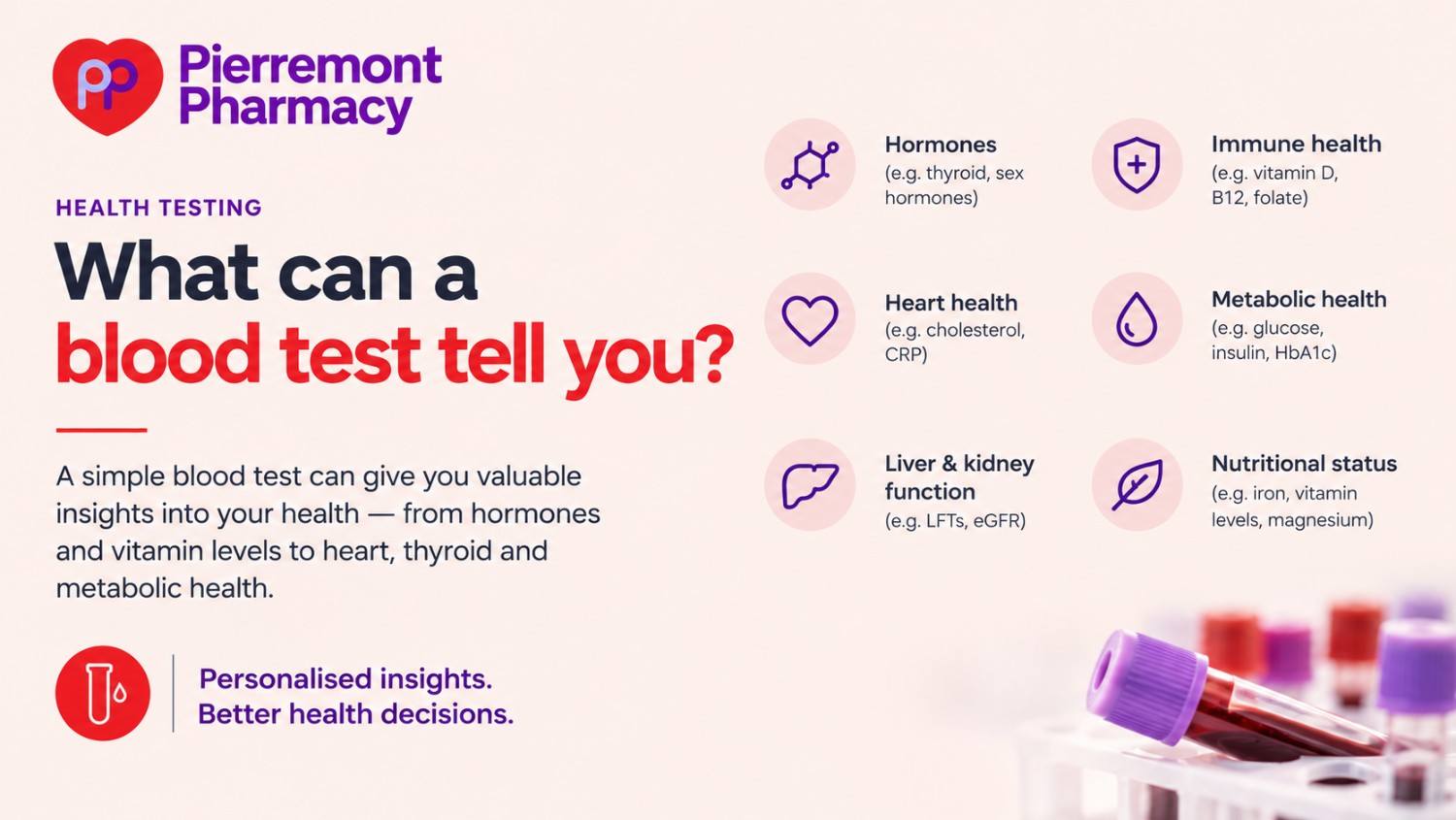
Blood contains thousands of measurable substances, including proteins, hormones, nutrients, antibodies, fats, glucose, electrolytes and blood cells. Different blood tests can therefore answer very different questions.
A blood test might be used to:
- Investigate particular symptoms
- Identify or monitor a nutritional deficiency
- Assess longer-term blood glucose
- Investigate hormone levels
- Measure markers of inflammation
- Assess cardiovascular risk factors
- Provide information about thyroid or kidney function
- Monitor an existing condition
- Follow a particular biomarker over time
But there is an important limitation: a blood test rarely makes a diagnosis by itself.
The result usually needs to be interpreted alongside your symptoms, medical history, medicines, family history and sometimes other tests or examinations.
That’s where our pharmacy team can help.
| Blood glucose | HbA1c |
| Cholesterol & blood lipids | Total cholesterol, LDL-C, HDL-C, triglycerides |
| Nutrition | Vitamin D, B12, folate, ferritin |
| Hormones & reproductive health | Testosterone, FSH, AMH, progesterone, hCG, cortisol |
| Inflammation | CRP, hs-CRP |
| Thyroid | TSH |
| Kidney | Cystatin C |
| Heart | NT-proBNP |
Can I have a blood test without seeing my GP?
For many private blood tests, yes. Private pharmacy testing allows you to request certain tests directly without first obtaining a referral from your GP. This can be useful if:
- you want to monitor something you already know about;
- you have a particular health marker you want to investigate;
- you want access to a test that would not routinely be offered to you by the NHS;
- you want to repeat a previous measurement;
- you want quicker or more convenient access to testing; or
- you simply want more information about a particular aspect of your health.
Private blood testing should, however, complement rather than replace appropriate NHS medical care. If you have significant or unexplained symptoms, the most important question may not be: “Which blood test should I buy?” but more so: “What is causing these symptoms?”
A doctor or other clinician may decide that you need several blood tests together, an examination, imaging or a completely different investigation.
Looking for convenient private blood testing in Broadstairs?
Private pharmacy testing gives you direct access to certain tests without first obtaining a GP referral.
Should I book a private blood test?
I have a specific marker I want to measure or monitor
→ Private pharmacy testing may be appropriate.
I have persistent or unexplained symptoms and don’t know the cause
→ Consider clinical assessment first.
I have severe or rapidly worsening symptoms
→ Seek urgent medical assessment… don’t wait for a private blood test.
Testing is most useful when you know what question you are trying to answer.
Looking for convenient private blood testing in Broadstairs?
Book your test directly with Pierremont Pharmacy and access private health testing without a GP referral for eligible tests.
Private vs NHS blood tests
Private blood tests versus NHS blood tests
These aren’t really competing services, not least because they serve somewhat different purposes.
An NHS blood test is generally requested because a healthcare professional has decided that there is a clinical reason for carrying it out. The result can then be interpreted alongside your medical history, symptoms and other investigations.
Private pharmacy testing offers something different: direct access, convenience and choice.
You may be able to request the particular marker you want measured without waiting for a GP appointment or needing a referral.
For somebody who is unwell and requires diagnosis, a conventional clinical pathway may be the appropriate starting point. For somebody who wants to monitor a known biomarker or investigate a specific health question, private testing can be useful.
Which blood tests should I have?
Which blood tests should I have?
There is no universal panel of blood tests that everybody needs. A better approach is to start with a question. For example:
“Could my tiredness be related to iron deficiency?”
Ferritin may provide useful information.
“Am I developing diabetes?”
HbA1c may be appropriate.
“Could my thyroid be underactive?”
TSH is commonly used as an initial thyroid test.
“Could I be vitamin D deficient?”
A 25-hydroxyvitamin D measurement can assess vitamin D status.
“What does my cholesterol profile look like?”
A lipid test can measure total cholesterol, LDL cholesterol, HDL cholesterol and triglycerides.
This approach is fundamentally different from ordering dozens of biomarkers simply because they are available. More testing isn’t necessarily better. If you measure enough things in healthy people, sooner or later something will fall outside a reference range. Many conventional laboratory reference intervals encompass approximately 95% of a reference population. That means some healthy people will have results lying outside the quoted range simply because of normal biological and statistical variation. That can lead to unnecessary anxiety, repeat testing and sometimes further investigations.
Thus a useful principle is: Good testing starts with a good question so before requesting a test, ask:
What am I trying to find out?
What will I do differently if the result is high?
What will I do if it is low?
What will I do if it is normal?
If the answer to all three is “nothing”, it is reasonable to ask whether the test is actually necessary.
Have a specific health question you'd like to investigate?
Our pharmacy team can help you understand which private blood testing may be appropriate and what the test can and cannot tell you.
Don't just test everything
Ask three questions first:
- What am I trying to find out?
- Will the result change what I do?
- Do I understand what the test can (and cannot) tell me?
Thoughtful testing leads to better decisions.
What does a normal blood-test result actually mean?
What does a “normal” blood-test result actually mean?
Blood-test reports commonly show your result alongside a reference range. It is tempting to interpret this as: Inside the range = healthy and: Outside the range = unhealthy.
But biology isn’t that simple. Reference intervals depend on the particular test and may also vary according to factors including:
- age;
- sex;
- pregnancy;
- time of day;
- recent food intake;
- hydration;
- exercise;
- medicines;
- illness; and
- the analytical method used.
An isolated high or low flag therefore does not automatically mean that you have a disease, or indeed that you are in perfect health. Hence a result lying inside a laboratory reference interval does not prove that everything is healthy.
Reference range isn’t the same as a diagnostic threshold
This distinction is important because some medical decisions use specifically validated diagnostic or treatment thresholds, rather than simply asking whether your result lies inside a laboratory reference interval.
HbA1c is a good example. Recognised thresholds are used when assessing diabetes and high diabetes risk and the same principle applies to many other biomarkers. The meaning of a blood test depends upon what was measured, why it was measured and the clinical context in which we are interpreting it.
Outside the range?
Doesn’t automatically mean disease.
Inside the range?
Doesn’t automatically guarantee health.
Context matters.
Age • sex • symptoms • medicines • timing • illness • biological variation
One blood test is a snapshot, not a biography
One blood test is a snapshot, not a biography
Our physiology changes continuously. Blood results may be affected by:
- recent illness;
- exercise;
- stress;
- sleep;
- dehydration;
- alcohol;
- food intake;
- time of day;
- medication;
- supplements;
- menstrual cycle; and
- ordinary biological variation.
Different biomarkers fluctuate to very different degrees: Cortisol, for example, follows a pronounced daily rhythm: Testosterone also varies through the day; CRP (a measure of inflammation) can rise substantially during infection or acute inflammation.
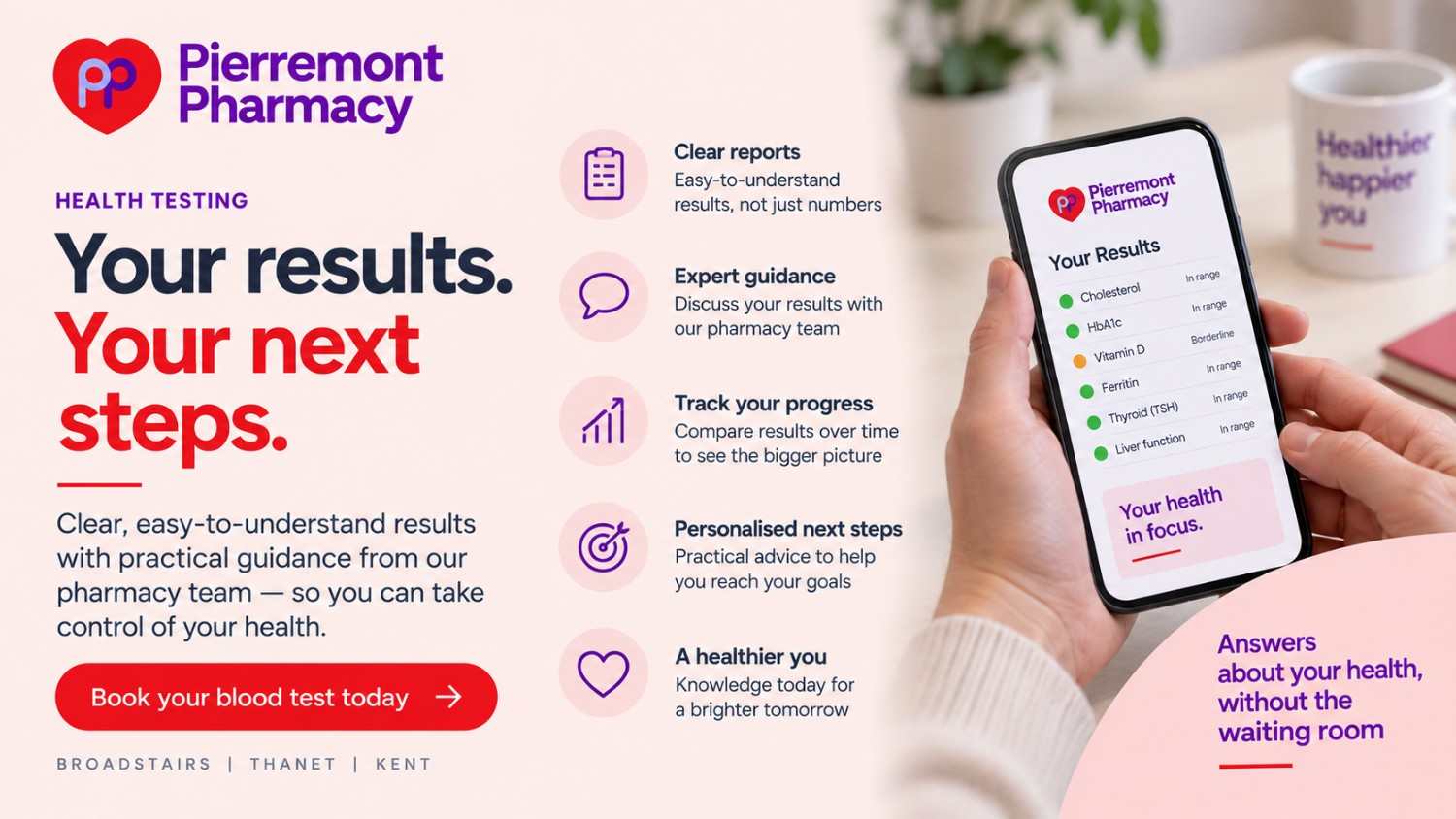
For this reason, sometimes the trend over time is more informative than one isolated measurement. If a result is surprising, repeating it under comparable conditions may sometimes be more useful than immediately assuming that something is wrong.
Do I need to fast before a blood test?
Not necessarily. Many blood tests do not require fasting. Some measurements can, however, be affected by recent food intake or have other preparation requirements so always follow the instructions provided for the particular test you have booked.
Importantly:
Do not stop prescribed medication simply because you are having a blood test unless the healthcare professional responsible for your care has specifically advised you to do so.
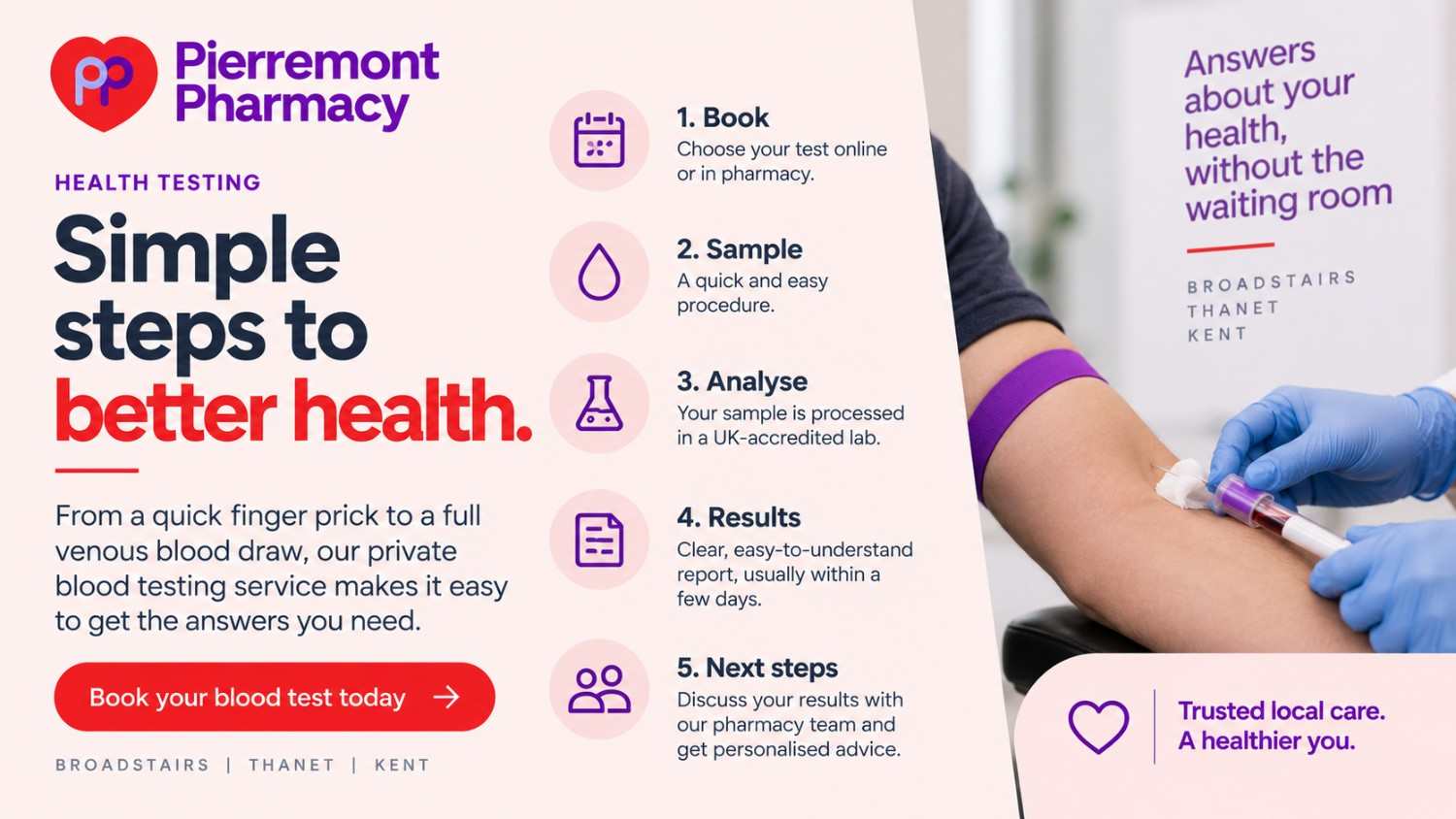
Finger prick or blood from the arm?
Different tests require different samples.
Finger-prick testing: A small lancet punctures the fingertip and a capillary blood sample is collected.
For suitable point-of-care tests this can provide a quick, convenient and minimally invasive way of obtaining a result.
Venous blood testing: A needle is inserted into a vein, usually in your arm, allowing a larger sample to be collected.
Some tests require venous blood because of the sample volume or analytical method involved but neither method is universally “better”. The important question is whether the sample and analytical method are appropriate for the biomarker being measured.
What tests are available?
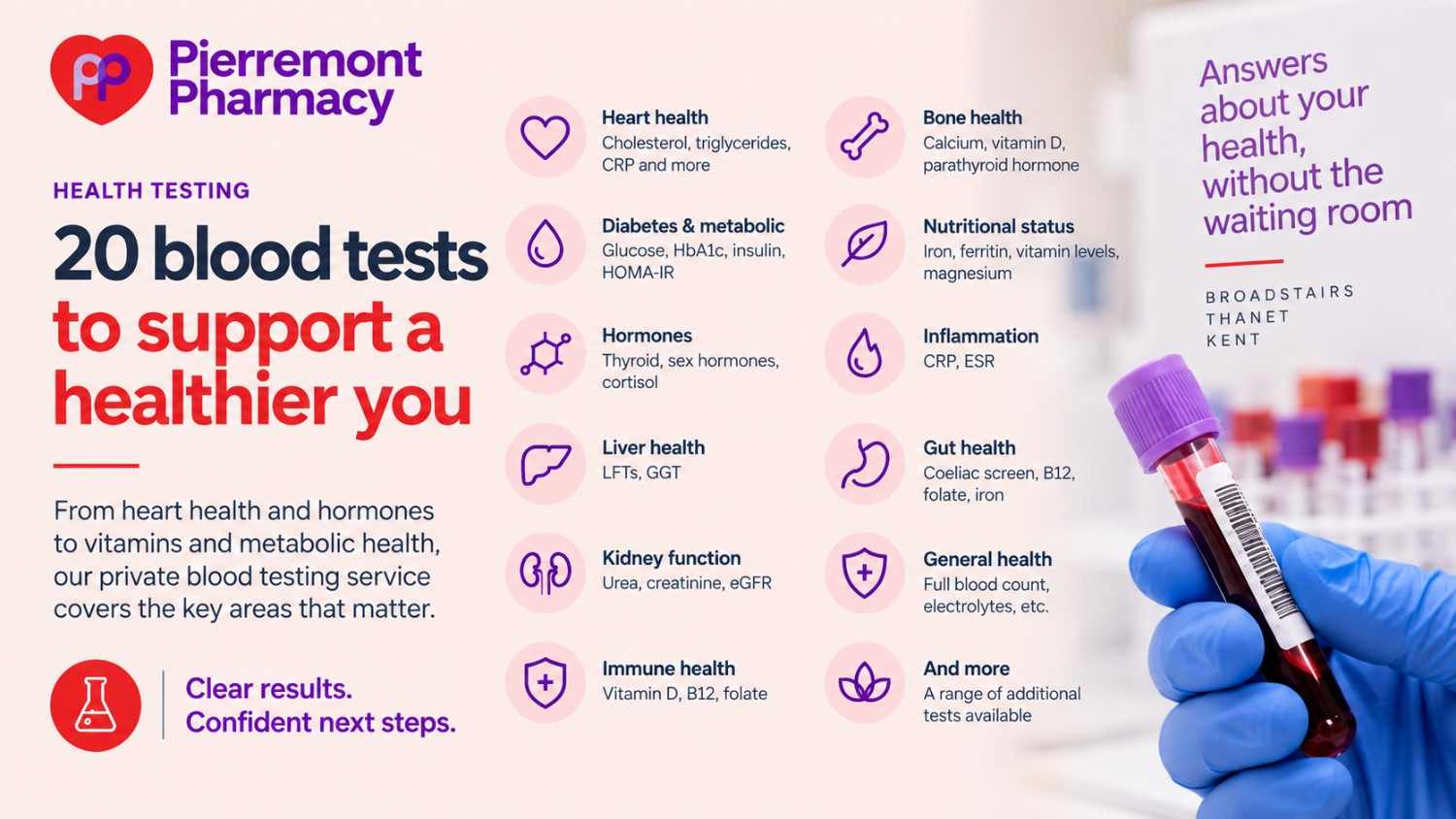
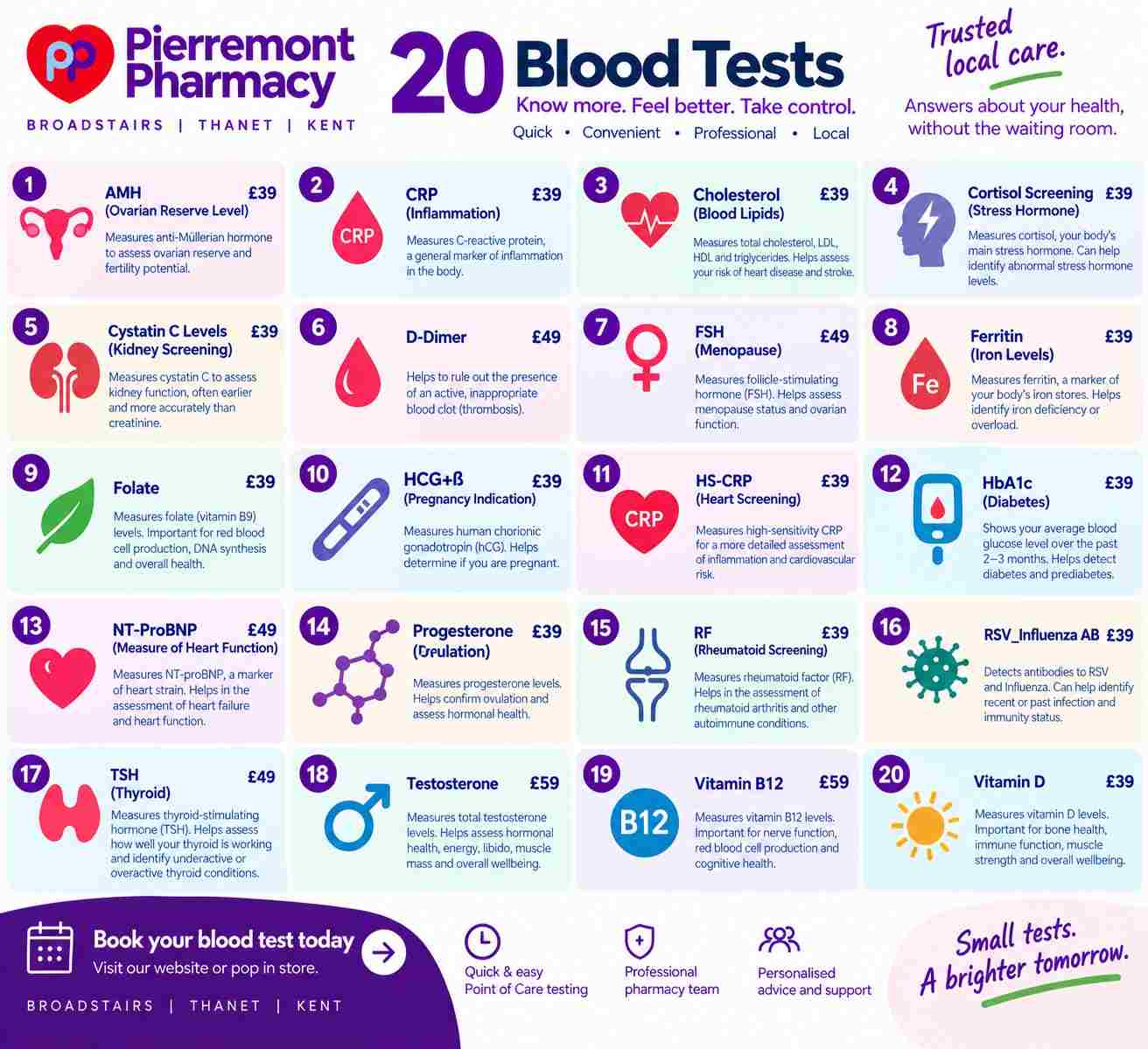
Our blood testing service encompasses 20 (and counting) different health tests, covering metabolic health, cardiovascular risk, nutritional status, hormones and reproductive health, inflammation, thyroid and kidney function, and respiratory infection testing.
Eighteen involve blood testing. RSV/Influenza A/B testing uses a swab and is therefore discussed separately.
Want to see which tests are available?
Explore the private health testing options available at Pierremont Pharmacy in Broadstairs.
Important information
This article is intended for general information and education. It should not be used to diagnose or treat a medical condition. Private testing does not replace assessment by your GP or another appropriate healthcare professional where symptoms or abnormal findings require investigation. If you believe you may have a medical emergency, seek urgent medical assistance.
Evidence and further reading: The individual guides in this series provide detailed test-specific references. Core sources for this and supporting articles include:
- NHS guidance on blood tests and blood-test preparation;
- NICE guidelines and Clinical Knowledge Summaries;
- UK laboratory medicine guidance;
- relevant Royal College and professional-society guidance; and
- systematic reviews and peer-reviewed research where appropriate.
Ready to take the next step?
Whether you want to monitor a particular health marker or investigate a specific health question, private blood testing can provide useful information when used for the right reason.Testing is available at Pierremont Pharmacy in Broadstairs for people throughout Thanet.